By Innovation Spine Medical – Rego Park, NY
Recovering from spine surgery is a transformative step toward restoring your mobility and improving your quality of life. While the surgical procedure itself is a major milestone, the period that follows is equally important. Effective pain management after spine surgery plays a crucial role in healing, mobility, emotional well-being, and preventing complications.
At Innovation Spine Medical, we believe patients should be empowered with the knowledge and resources needed for a smooth, successful recovery. Below, we explore strategies to help you optimize post-surgical healing and reduce discomfort—and we’ve included an extensive Q&A section to address common patient concerns.
Understanding Post-Surgical Pain
It’s normal to experience a range of sensations after spine surgery, including soreness, stiffness, muscle spasms, or nerve-related pain. These symptoms typically improve gradually, but proper pain management helps ensure you can move comfortably, sleep well, and participate in rehabilitation exercises.
Effective Pain Management Strategies
1. Medication Management
Post-operative pain medications may include:
- NSAIDs (as recommended by your surgeon)
- Acetaminophen
- Muscle relaxants
- Short-term opioids for severe pain
- Nerve pain medications (e.g., gabapentin or pregabalin)
Tip: Always follow your surgeon’s prescription plan—do not adjust medication on your own.
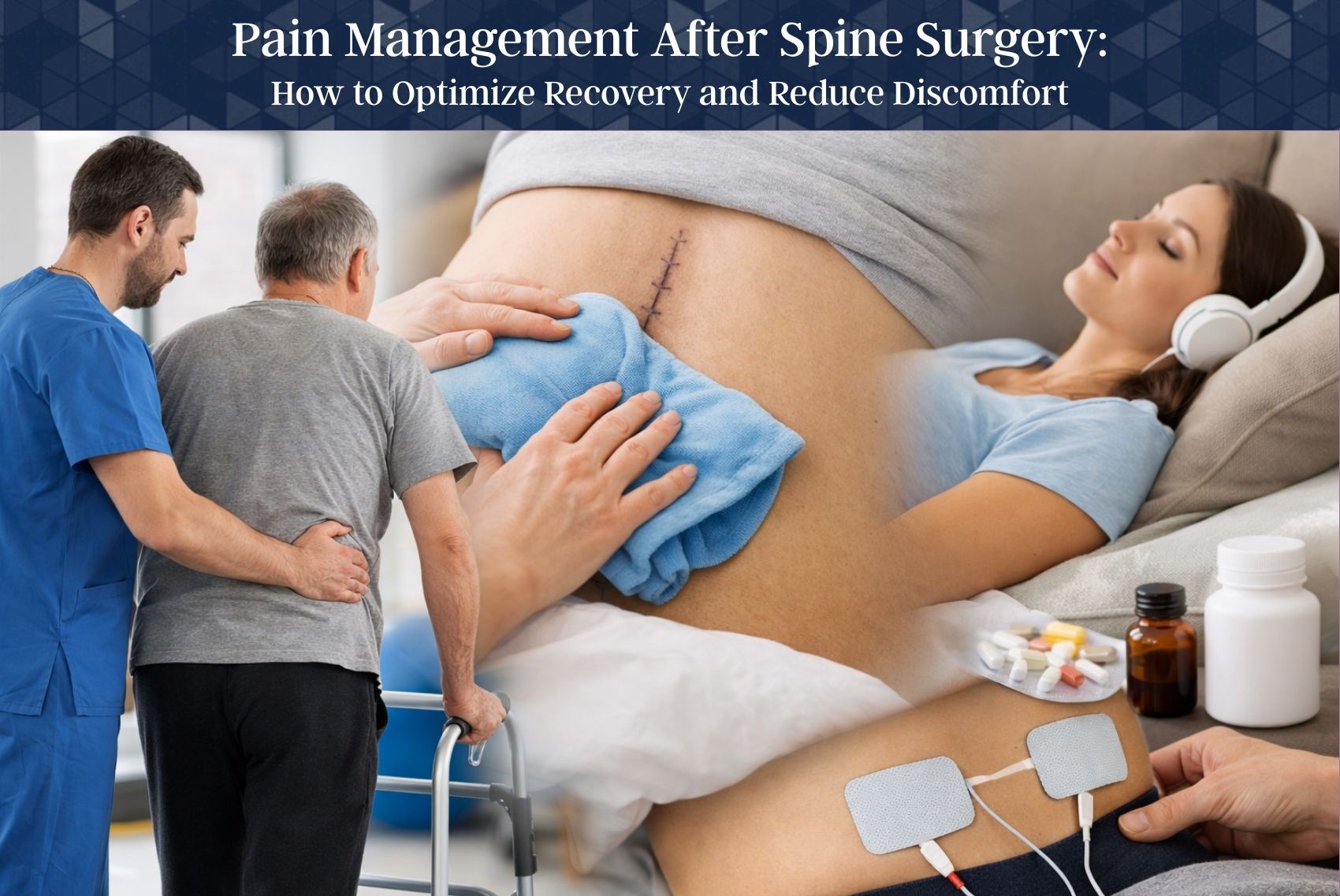
2. Physical Therapy & Guided Movement
Movement is essential for recovery. Physical therapy helps:
- Reduce stiffness
- Improve blood flow
- Strengthen muscles supporting the spine
- Prevent complications such as blood clots
Your provider will guide you on safe exercises based on your surgical procedure and healing stage.
3. Ice, Heat & Other Non-Medication Pain Relief
- Ice: Useful during the first 48–72 hours to reduce swelling
- Heat: Helps relax muscles and reduce spasms later in recovery
- TENS units: Provide gentle electrical stimulation for pain relief
- Mind-body techniques: Deep breathing, meditation, and guided relaxation
4. Healthy Lifestyle Habits
Your body heals best when supported by optimal health:
- Stay hydrated
- Eat nutrient-rich foods
- Avoid smoking, which slows healing
- Maintain a healthy sleep schedule
5. Follow-Up Appointments & Monitoring
Routine check-ins allow your provider to monitor incision healing, adjust medications, and ensure your spine is stabilizing properly. Report any unusual symptoms promptly.
Comprehensive Q&A: Pain Management After Spine Surgery
Q: How much pain is normal after spine surgery?
A: Most patients experience moderate pain or discomfort for several days to weeks, depending on the procedure. Pain should gradually improve; if it worsens, contact your surgeon.
Q: When should I start physical therapy?
A: Most patients begin light movement and guided exercises within days of surgery. Formal physical therapy often begins within 2–6 weeks, depending on the surgical type.
Q: What signs indicate complications?
Seek prompt medical attention if you experience:
- Increasing pain instead of improvement
- Fever or chills
- Redness, warmth, or drainage from the incision
- New numbness or weakness in the limbs
- Loss of bladder or bowel control
Q: Can pain medications become addictive?
A: Opioids are used cautiously and typically for short periods. Your provider will prescribe the lowest effective dose and help you taper safely.
Q: When can I return to work or normal activities?
A: Light activities may resume within a few weeks, while more demanding tasks can take several months. Always follow your surgeon’s timeline.
Q: Are there alternatives to medication for long-term pain relief?
A: Yes. Many patients benefit from:
- Physical therapy
- Chiropractic care or osteopathic manipulation (when approved)
- Anti-inflammatory diet
- Acupuncture
- Posture and ergonomic adjustments
Q: How can I reduce swelling at home?
A: Elevating the legs slightly, using ice packs (as directed), and gentle walking can improve circulation and reduce swelling.
Q: Is neuropathic (nerve) pain normal after spine surgery?
A: It can be. Nerves need time to heal, especially if they were compressed before surgery. Tingling or shooting sensations often improve over weeks or months.
Contact Innovation Spine Medical
Innovation Spine Medical
📍 9701 66th Ave
Rego Park, NY 11374
📞 Phone: (718) 275-5200
🌐 Website: innovationspineny.com
📅 Appointments: https://innovationspineny.com/appointments