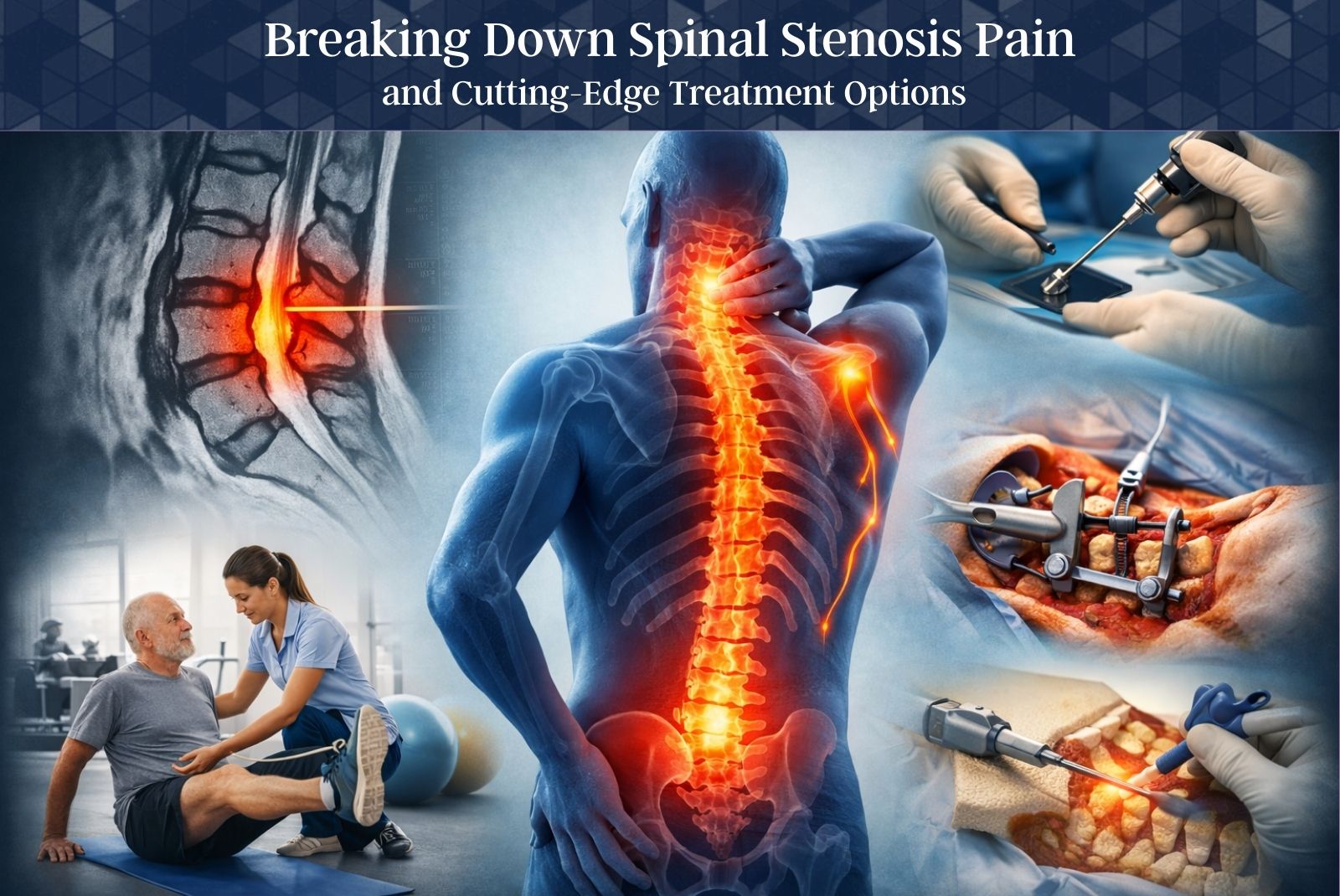
Spinal stenosis is one of the most common causes of chronic back and neck pain, especially among adults over 50. But despite how widespread it is, many people struggle to understand why they hurt, what is happening inside the spine, and which treatments actually work.
At Innovation Spine Medical, we believe that knowledge empowers patients. When you understand your condition, you can make confident decisions about your care. Below, we break down the causes of spinal stenosis, the symptoms to watch for, and the advanced treatment solutions that can finally bring relief.
What Is Spinal Stenosis?
Spinal stenosis occurs when the open spaces within the spine narrow, placing pressure on the spinal cord or nearby nerve roots. This compression can develop in the:
- Cervical spine (neck)
- Lumbar spine (lower back)—the most common location
- Thoracic spine (mid-back)—rare, but possible
The narrowing may result from arthritis, disc degeneration, thickened ligaments, bone spurs, or past injuries.
Why Does Spinal Stenosis Cause Pain?
When nerves are compressed, normal electrical signals cannot travel freely to the muscles or skin. This can trigger:
- Sharp or burning pain
- Numbness or tingling
- Muscle weakness
- Cramping or heaviness in the legs
- Difficulty standing or walking for long periods
For many patients, pain improves when sitting or leaning forward, because this position slightly opens the spinal canal and eases nerve pressure.
Common Symptoms of Spinal Stenosis
Knowing the signs early can help prevent worsening nerve damage. Symptoms include:
Lumbar Spinal Stenosis
- Lower back pain
- Leg pain that radiates downward
- Difficulty walking without leaning forward
- Relief while sitting
- Weakness in legs or feet
Cervical Spinal Stenosis
- Neck pain
- Pain radiating to shoulders or arms
- Numbness in hands
- Difficulty with fine motor skills
- In severe cases, problems with balance or coordination
If left untreated, severe cervical stenosis can lead to permanent nerve damage—making early diagnosis essential.
How Is Spinal Stenosis Diagnosed?
At Innovation Spine Medical, diagnosis begins with:
- Detailed medical history review
- Physical and neurological examinations
- Advanced imaging, such as MRI, CT scan, or X-rays
These tools allow our specialists to pinpoint exactly where the nerve compression occurs and how extensive it is.
Cutting-Edge Treatment Options for Spinal Stenosis
Modern medicine offers more solutions than ever—including non-surgical and minimally invasive treatments designed to reduce pain and restore mobility.
1. Conservative Non-Surgical Treatments
Many patients experience significant improvement with targeted therapies such as:
Physical Therapy
Strengthens supporting muscles, improves posture, and increases spinal stability.
Medications
Anti-inflammatory medications, nerve pain medications, or muscle relaxants may offer relief.
Epidural Steroid Injections
Reduces inflammation around compressed nerves and can provide long-lasting pain improvement.
2. Minimally Invasive Procedures
If conservative care does not produce enough relief, minimally invasive options can help decompress nerves without major surgery.
Interspinous Process Devices (Spacer Implants)
These small implants gently create more space in the spinal canal to relieve pressure.
Minimally Invasive Lumbar Decompression (MILD® Procedure)
Removes excess ligament tissue through a tiny incision, improving spinal canal diameter.
Radiofrequency Ablation
Targets and deactivates pain-producing nerves for long-lasting relief.
These procedures often require little downtime and have a lower risk profile than open surgery.
3. Advanced Surgical Solutions
For severe cases, surgery may be the most effective approach. Innovations in surgical techniques have made procedures more precise, less invasive, and faster to recover from.
Common options include:
Laminectomy
Removes part of the vertebra to enlarge the spinal canal.
Discectomy
Removes portions of a herniated disc compressing a nerve.
Spinal Fusion or Stabilization Procedures
Used when structural support is needed to prevent instability.
Our spine specialists create personalized treatment plans to ensure the safest, most effective path forward.
Spinal Stenosis Q&A: Your Top Questions Answered
Q: Is spinal stenosis a progressive condition?
A: It can be. While not everyone worsens over time, many patients experience increased pain or neurological symptoms as the spine continues to age. Early treatment can slow progression.
Q: Can spinal stenosis go away on its own?
A: While symptoms may fluctuate, the anatomical narrowing usually does not reverse without medical intervention. Conservative care can effectively manage symptoms, but more severe cases may need procedural treatment.
Q: How do I know if I’m a candidate for minimally invasive treatments?
A: Ideal candidates typically have moderate nerve compression and persistent pain despite conservative therapy. Imaging and an in-depth evaluation help determine which approach is best.
Q: When should I consider surgery?
A: Surgery is recommended when:
- Symptoms severely limit daily activities
- There is progressive weakness or numbness
- Non-surgical treatments have failed
- Imaging shows significant nerve compression
Q: Will spinal stenosis treatments stop my pain completely?
A: Many patients experience dramatic relief, though results vary depending on severity, overall health, and the chosen treatment.
Q: How long is the recovery time?
A:
- Conservative treatments: minimal downtime
- Minimally invasive procedures: days to weeks
- Surgery: several weeks to months, depending on the procedure
We guide every patient through a tailored recovery plan.
Contact Information
Innovation Spine Medical
9701 66th Ave
Rego Park, NY 11374
Phone: (718) 275-5200
Website: innovationspineny.com
Book Appointments: https://innovationspineny.com/appointments