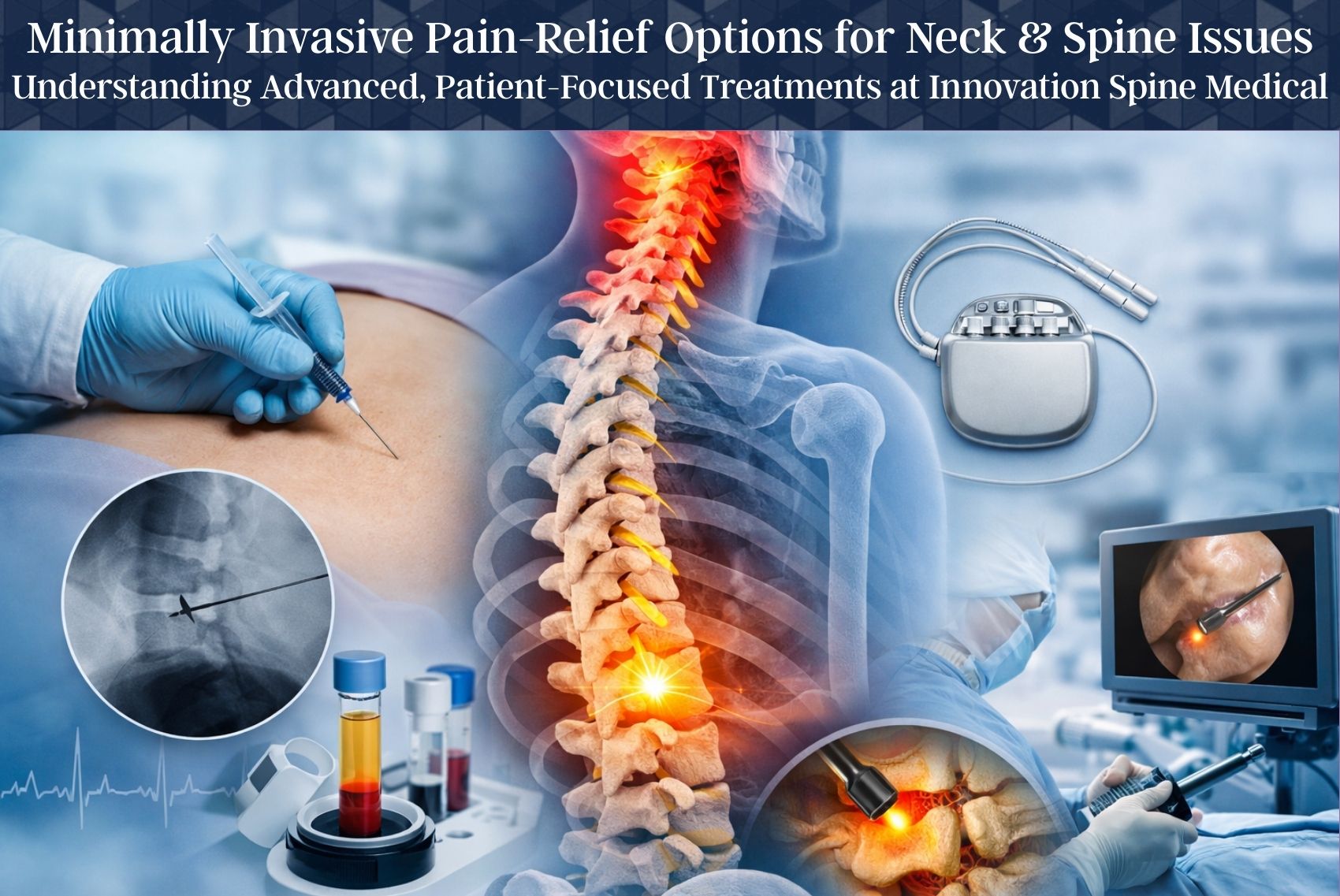
Understanding Advanced, Patient-Focused Treatments at Innovation Spine Medical
Neck and spine pain affects millions of people each year, often limiting mobility, disrupting sleep, and reducing quality of life. While traditional open spine surgery can be effective for certain complex conditions, most patients today can benefit from minimally invasive alternatives that prioritize faster recovery, reduced pain, and less downtime.
At Innovation Spine Medical, our board-certified specialists use state-of-the-art technology and image-guided procedures to diagnose and treat spinal conditions with precision. Whether your pain stems from a herniated disc, spinal stenosis, arthritis, or nerve compression, minimally invasive treatments may offer the relief you need—without the risks of major surgery.
What Makes a Treatment Minimally Invasive?
Minimally invasive spine and pain-management procedures are designed to target the source of pain through tiny incisions or needle-based techniques. Key benefits include:
- Lower risk of infection and complications
- No large surgical incision
- Outpatient procedures with same-day discharge
- Less discomfort during recovery
- Faster return to normal activities
- Precision targeting of nerves, joints, and inflamed tissues
These approaches are ideal for patients seeking effective pain relief while avoiding the downtime associated with traditional surgery.
Top Minimally Invasive Pain-Relief Options for Neck & Spine Issues
1. Epidural Steroid Injections (ESIs)
ESIs deliver anti-inflammatory medication directly into the epidural space surrounding irritated nerves. They are commonly used for:
- Herniated discs
- Sciatica
- Pinched nerves
- Spinal stenosis
Results may include reduced inflammation, improved mobility, and significant pain relief lasting weeks to months.
2. Facet Joint Injections
Facet joints help stabilize the spine, but arthritis or degeneration can cause localized or radiating pain. These injections:
- Diagnose the source of pain
- Deliver targeted medication to reduce inflammation
- Help restore mobility and comfort
3. Radiofrequency Ablation (RFA)
A minimally invasive technique that uses heat to disable overactive pain-signaling nerves. RFA is ideal for chronic neck or lower-back pain due to facet joint dysfunction.
Benefits include:
- Long-lasting relief (6–18 months or more)
- Quick recovery
- Reduced need for medication
4. Trigger Point Injections
For patients with muscle spasms or myofascial pain syndrome, trigger point injections help release tight, painful muscle knots and restore normal function.
5. Spinal Cord Stimulation (SCS)
This advanced therapy uses a small, implantable device that disrupts pain signals before they reach the brain.
Best for patients with:
- Chronic nerve pain
- Failed back surgery syndrome (FBSS)
- Neuropathic pain
A trial period lets patients test effectiveness before committing to long-term therapy.
6. Minimally Invasive Lumbar Decompression (MILD®)
A small, lumbar decompression procedure designed specifically for spinal stenosis. It removes excess ligament tissue causing nerve compression—without open surgery.
7. Regenerative Medicine Options
(If clinically appropriate)
Platelet-Rich Plasma (PRP) or other biologic therapies may help support healing of ligaments, discs, and joints, though they are not suitable for every patient. Your specialist will determine candidacy based on medical need.
Comprehensive Q&A
Q: How do I know whether I am a candidate for minimally invasive treatment?
A: Most patients with chronic neck or back pain qualify, especially if they haven’t responded to physical therapy or medications. A thorough evaluation—including imaging and diagnostic testing—helps determine the right procedure for your condition.
Q: Are minimally invasive procedures painful?
A: Most treatments involve only mild discomfort and are performed using local anesthesia. Many patients report immediate or gradual improvement shortly afterward.
Q: How long is the recovery period?
A: Recovery is significantly faster than with traditional surgery. Many patients resume light activities the same day and return to normal routines within days.
Q: Can minimally invasive treatments prevent the need for surgery?
A: In many cases, yes. These procedures often provide long-lasting relief and help patients avoid or delay the need for more invasive operations.
Q: What conditions do these treatments help with?
A:
- Herniated or bulging discs
- Degenerative disc disease
- Sciatica
- Spinal stenosis
- Arthritis of the spine
- Facet joint pain
- Muscle spasms and myofascial pain
- Chronic neck or lower-back pain
Q: When should I see a spine specialist?
A: Seek professional evaluation if your pain:
- Lasts longer than a few weeks
- Radiates into the arms or legs
- Causes numbness or weakness
- Disrupts daily activities or sleep
- Flares despite rest, stretching, or medications
Early intervention prevents worsening symptoms and speeds recovery.
Contact Innovation Spine Medical
Innovation Spine Medical
📍 9701 66th Ave, Rego Park, NY 11374
📞 Phone: (718) 275-5200
🌐 Website: innovationspineny.com
📅 Book an Appointment: https://innovationspineny.com/appointments