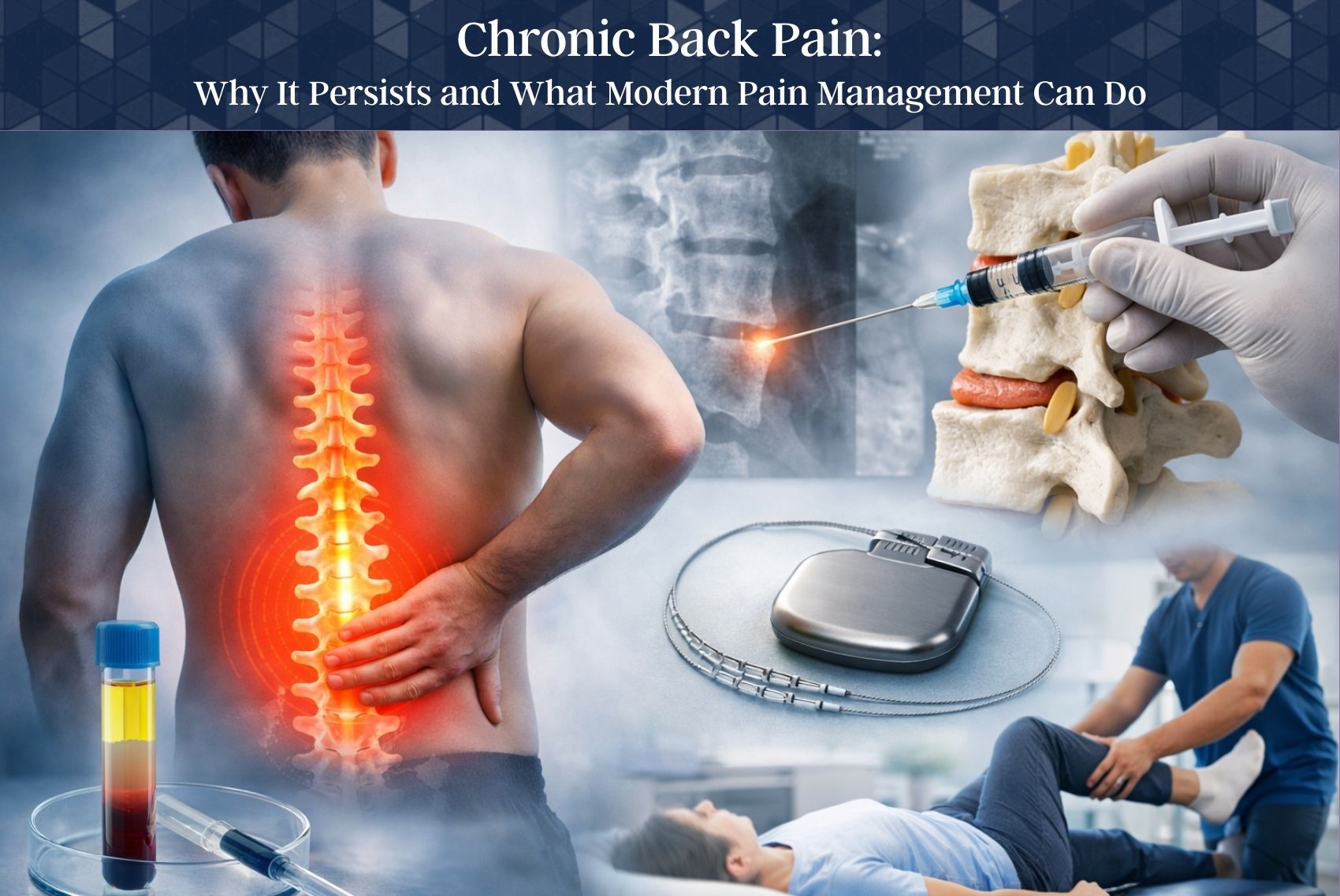
Chronic back pain affects millions of people in the United States, often disrupting work, mobility, and overall quality of life. For many, the pain becomes more than a physical sensation—it impacts energy levels, sleep, mood, and the ability to enjoy daily activities. But why does back pain linger for some individuals while resolving quickly for others? And more importantly, what can modern pain management do to help?
At Innovation Spine Medical, we specialize in identifying the root causes of persistent back pain and offering advanced, evidence-based treatment options. Understanding why your back pain persists is the first step toward long-term relief.
Why Chronic Back Pain Persists
1. Underlying Structural Problems
Chronic pain often stems from anatomical changes within the spine, such as:
- Herniated or bulging discs
- Degenerative disc disease
- Spinal stenosis
- Facet joint arthritis
- Spondylolisthesis
These structural issues can cause ongoing inflammation, nerve irritation, or mechanical pain.
2. Delayed or Incomplete Healing
Back injuries—whether from sports, heavy lifting, or accidents—may fail to heal properly. Scar tissue, muscle imbalance, or weakened stabilizing muscles can all contribute to lasting pain.
3. Nerve-Related Pain
If a nerve becomes compressed or damaged, the resulting pain may persist even after the initial injury resolves. Conditions such as sciatica can cause sharp, radiating pain that becomes chronic without targeted treatment.
4. Inflammation and Chronic Conditions
Autoimmune conditions, arthritis, and metabolic disorders can fuel ongoing inflammation in the spine. Over time, this chronic inflammation may intensify pain and stiffness.
5. Lifestyle Factors
Modern lifestyles often contribute to chronic back pain. Common culprits include:
- Prolonged sitting or poor posture
- Weak core muscles
- Stress and poor sleep
- Lack of physical activity
Even small lifestyle changes can significantly improve long-term pain outcomes.
How Modern Pain Management Helps
Today’s pain management techniques are more advanced, precise, and minimally invasive than ever before. At Innovation Spine Medical, we tailor treatment plans to each patient using state-of-the-art diagnostics and interventions.
1. Image-Guided Injections
Epidural steroid injections, facet joint injections, and nerve blocks can reduce inflammation and offer long-lasting relief. Imaging ensures accuracy and safety.
2. Radiofrequency Ablation (RFA)
This non-surgical procedure uses heat to disrupt pain signals from targeted nerves—often providing relief for six months or longer.
3. Spinal Cord Stimulation (SCS)
When chronic pain does not respond to traditional treatments, spinal cord stimulation can help by interrupting pain signals before they reach the brain.
4. Regenerative Medicine
Treatments such as platelet-rich plasma (PRP) can support the body’s natural healing process and improve tissue repair.
5. Comprehensive Rehabilitation
Physical therapy, posture correction, and targeted exercise can restore strength, balance, and function, reducing the likelihood of recurring pain.
6. Medication Management
When appropriate, medications may be used alongside other therapies to control inflammation, relax muscles, or reduce nerve pain.
Frequently Asked Questions (Q&A)
Q: How do I know whether my back pain is considered “chronic”?
Back pain is classified as chronic when it lasts 12 weeks or longer, even after the original injury or cause has been addressed.
Q: Should I see a pain specialist if I’ve already tried physical therapy or chiropractic care?
Yes. If conservative treatments haven’t provided meaningful relief, a pain management specialist can evaluate underlying causes and offer advanced solutions.
Q: Are the treatments painful?
Most modern pain management treatments are minimally invasive and well-tolerated. Procedures are typically done in-office with local anesthesia or mild sedation.
Q: What if my imaging (MRI/CT) shows nothing significant, but I still experience pain?
Not all chronic back pain comes from visible structural problems. Muscular dysfunction, nerve irritation, and soft tissue issues may not appear clearly on imaging. A specialist can help identify these sources.
Q: Will I need surgery?
Surgery is rarely the first option. Many patients find long-term relief through non-surgical methods such as injections, RFA, or spinal stimulation.
Q: Can lifestyle changes really help reduce chronic pain?
Absolutely. Improvements in posture, exercise, ergonomics, sleep, and stress levels can significantly impact pain intensity and recurrence.
Take Control of Your Back Pain
Chronic back pain doesn’t have to dictate your life. With modern techniques and customized treatment plans, lasting relief is possible. The team at Innovation Spine Medical is committed to diagnosing the root cause of your pain and guiding you toward a healthier, pain-free future.
Contact Information
Innovation Spine Medical
9701 66th Ave
Rego Park, NY 11374
Phone: (718) 275-5200
Website: innovationspineny.com
Book an Appointment: https://innovationspineny.com/appointments